How We Remove Pet Urine From Carpet Padding Not Just the Surface

Remove Pet Urine Odor From Carpet Padding | Professional Guide
If you’ve cleaned your carpet multiple times but still smell pet urine, especially on humid days, the problem isn’t in your carpet fibers—it’s deep in the padding underneath. Surface cleaning with home carpet cleaners won’t eliminate the odor because these methods can’t reach where the real contamination lives. To truly remove pet urine from carpet padding, you need specialized sub-surface extraction techniques, professional-grade enzymatic treatments applied directly into the padding, or in severe cases, complete padding replacement.
We understand how frustrating this is. You love your pets, but coming home to that unmistakable ammonia smell is unbearable. You’ve tried every product at the store, maybe even hired a service that promised results. Yet every time it gets warm or humid, that odor comes right back.
Why Surface Cleaning Doesn’t Work
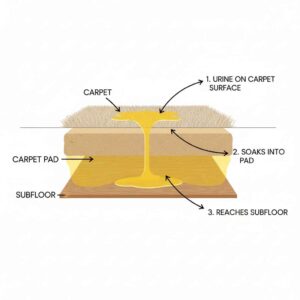
Here’s what most pet owners don’t realize, when your dog or cat has an accident, that urine doesn’t just sit on top of the carpet fibers. Within seconds, it soaks downward through your carpet and into the padding below. The carpet padding acts exactly like a sponge, absorbing and trapping the urine.
The visible stain on your carpet surface represents only a fraction of the actual contamination. When urine reaches the padding, it spreads horizontally, creating a contaminated area that’s typically five to ten times larger than the visible surface stain. In severe cases, the urine continues down to the subfloor beneath everything else.
The Science Behind the Persistent Smell
Fresh urine contains water, uric acid, urea, proteins, and other organic compounds. As it sits in your carpet padding, bacteria begin breaking it down. This creates ammonia that sharp, nose-burning smell you recognize. Worse, uric acid forms crystals that aren’t water-soluble, which means regular cleaning can’t dissolve them.
These crystals are hygroscopic, meaning they absorb moisture from the air. This is why the smell gets worse on humid days or when you run the heat—the crystals are reactivating and releasing odor. Cat urine is even more challenging because it contains mercaptans, sulfur-based compounds that create an especially pungent odor.
Why Your DIY Methods did not work
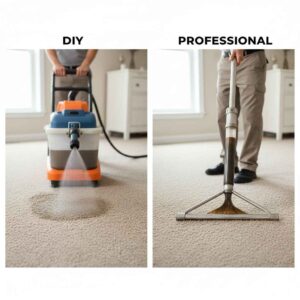
Baking soda and vinegar can help with fresh surface accidents, but they can’t penetrate deep enough to reach urine in the padding. Retail enzymatic cleaners are a step in the right direction, but they’re not concentrated enough and most of the product never reaches the padding where it’s needed.
Steam cleaning or rental carpet cleaners actually make things worse. Heat sets protein-based stains permanently by bonding them to carpet fibers. Plus, rental machines have weak suction compared to professional equipment—you’re adding water but not extracting it effectively, which pushes urine deeper and spreads contamination wider.
How Professional Pet Urine Removal Actually Works
Professional carpet cleaning companies use completely different equipment and techniques designed specifically to reach carpet padding and eliminate contamination at the source.
UV Light Inspection
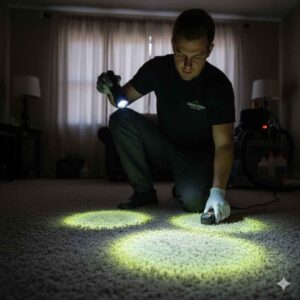
We start with UV black light inspection to find all contaminated areas, including dried stains from months ago. Pet urine contains phosphorus that glows under ultraviolet light even when completely dry and invisible. We typically discover many more spots than homeowners realized existed.
Sub-Surface Extraction
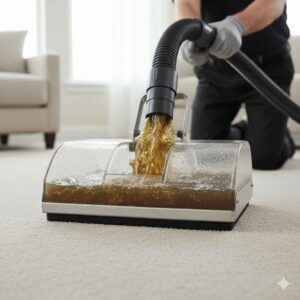
This is where professional treatment differs dramatically from DIY methods. We use specialized tools like the Water Claw that inject cleaning solution under pressure directly into the carpet padding, then extract it along with the dissolved urine using powerful truck-mounted vacuum systems.
Our equipment generates 400-800 PSI of vacuum pressure compared to rental machines’ 100 PSI or less. We flush each contaminated area multiple times until the extracted liquid runs clear. This sub-surface extraction process literally pulls the urine out of the padding rather than just cleaning the surface.
Professional Enzymatic Treatment
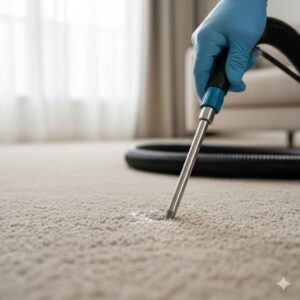
After extraction removes bulk contamination, we inject commercial-grade enzymatic solutions directly into the padding. These products are significantly stronger than retail versions. The enzymes need 24-72 hours to work, actively consuming organic compounds and dissolving those stubborn uric acid crystals that regular cleaning can’t touch.
Final Extraction and Neutralization
We perform thorough hot water extraction to rinse away enzyme residues and any remaining contamination. Then we apply pH-balancing treatments and odor neutralizers not deodorizers that mask smells, but products that chemically neutralize odor molecules.
When Padding Replacement Is Necessary

Sometimes padding is too contaminated to save. This happens when pets repeatedly urinate in the same spot over weeks or months. We carefully pull back the carpet, remove contaminated padding sections, treat the subfloor if necessary, and install new moisture-barrier padding designed to resist future accidents.
Signs You Need Professional Help
You should call professionals when you notice:
- Persistent odor that returns after cleaning, especially worse on humid days
- Multiple cleaning attempts have failed to eliminate the smell
- Old, dried stains that have been there for weeks or longer
- Carpet feels damp in spots that weren’t recently cleaned
- Discoloration from underneath showing through the carpet surface
- Strong ammonia smell rather than just “pet smell”
Cat urine almost always requires professional treatment due to its chemical complexity. If you’ve already tried DIY methods without success, continuing to spend money on retail products is just throwing good money after bad.


Comments
Post a Comment